

Tavola rotonda
Moderatore Andrea Gambaro, Presidente della IAS
Intervengono:
-
Avv. Stefano Sorvino (Direttore Generale ARPAC)
-
Dott. Piero Cau (Dirigente Unità Operativa Monitoraggio Qualità dell’Aria-ARPAC)
-
Ing. Maria Rosaria Della Rocca (Regione Campania)
-
Dott.ssa Cristina Leonardi (MASE/CNR-IIA)
Presentazione del Sito Museale di Santa Maria la Nova
Intervengono:
Prof. Giuseppe Reale, Dott. Alessio Cuccaro, Prof.ssa Maria Rosaria Vigorito
INVITED SPEAKERS
Ulrike Dusek
Ulrike Dusek got a master degree in Physics at the University of Vienna, and then pursued a PhD at the University of Washington in Seattle. Both her master and PhD work were related to hygroscopicity of atmospheric aerosols.
She then had a post-doc position at the MPI-Mainz working on cloud condensation nuclei, developing a method for measuring size-resolved cloud condensation nuclei spectra.
A following post-doc at Utrecht University in the Netherlands was focused on isotopic analysis of aerosols, combining 14C and stable carbon isotopes. This led to a tenure track position at the Centre of Isotope Research (University of Groningen), where she continued to work on aerosol isotopic analysis and applied it to various regions on the globe, as well as soot particles from lake sediments. At the same time she developed a research line on aerosols and clouds by setting up a coastal aerosol-cloud measurement station in the North of the Netherlands. She currently leads a consortium project on aerosol-cloud interactions under high reactive nitrogen conditions.
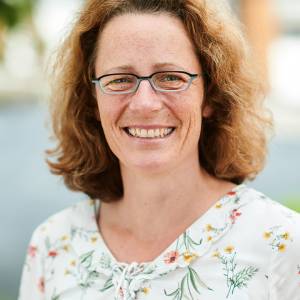
Filippo Giorgi
Filippo Giorgi nasce a Sulmona (AQ) nel 1959, ottiene una laurea in Fisica nell’Università degli Studi dell’Aquila nel 1982 ed un Ph.D. in Scienze dell’ Atmosfera nella School of Geophysical Sciences del Georgia Institute of Technology, ad Atlanta, Georgia, USA, nel 1986.
Dal 1986 al 1998 è ricercatore nel National Center for Atmosferic Research (NCAR) in Boulder, Colorado, USA, uno dei principali centri di ricerca internazionali sul clima. Nel 1998 si trasferisce al Abdus Salam International Centre for Theoretical Physics (ICTP), a Trieste, dove è il responsabile della Sezione di Fisica della Terra dal 1998 al 2024. Dal 2024 è emerito all’ICTP.
Giorgi è un esperto a livello internazionale di modellistica climatica, cambiamenti climatici ed i loro effetti sul pianeta e la società, interazioni fra clima e biosfera ed interazioni fra clima e aerosols. È autore di oltre 420 articoli in riviste scientifiche internazionali ed è inserito nella lista degli autori scientifici più citati nel campo delle scienze della Terra del 2001, 2022, 2023 e 2025. Nel 2025 uno studio della Stanford University lo ha posto all’ottavo posto (su 79651) nella lista degli scienziati internazionali più influenti nel campo della Meteorologia e Fisica dell’Atmosfera. Ha contribuito alla stesura dei rapporti sui cambiamenti climatici redatti dal Intergovernmental Panel on Climate Change (IPCC) fin dagli anni novanta. Dal 2002 al 2008 è stato vice-direttore del Gruppo di Lavoro I dell’IPCC che, nel 2007, ha vinto ex-equo con al Gore, il premio Nobel per la pace.
Giorgi fa parte di molti comitati scientifici internazionali e, fra i suoi riconoscimenti, annovera la medaglia Alexander von Humboldt della European Geosciences Union (EGU) ottenuta nel 2018 in riconoscimento della sua eccellenza scientifica e del suo contributo al progresso scientifico nei paesi in via di sviluppo. Giorgi è membro corrispondente dell’Accademia Nazionale dei Lincei dal 2024 e dell’Istituto Veneto di Scienze, Lettere e Arti dal 2022.
Griša Močnik
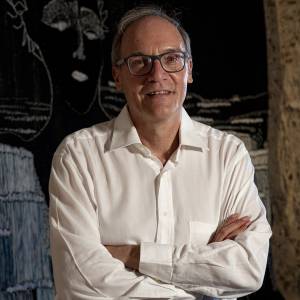
Griša Močnik works in the field of aerosol optical properties. He is the head of the Center of Atmospheric Research and the Dean of the School for Environmental Sciences at the University of Nova Gorica, a director of Haze Instruments Ltd., and a research associate at Jožef Stefan Institute. He received his doctorate from the University of Ljubljana on photothermal and photoacoustic methods for investigation of highly absorbing and scattering samples.
He has been a principal investigator in numerous international and national research and development projects in the field of aerosol instrumentation and laser devices. His work is mostly focused on the development of novel instrumentation for research of aerosol optical properties and application of this instrumentation – in particular measurement of black carbon and other light absorbing carbonaceous aerosols. For 10 years he was the director of research and development SME. In 2021, he has been awarded the Slovenian national innovation Puh Award for outstanding achievements in the development of methods for measuring aerosol absorption. He is working on the standardization of aerosol absorption coefficient measurements.
His current research focuses mainly on the development of direct methods and instruments to measure aerosol absorption using photo-thermal interferometry; source apportionment of carbonaceous aerosol; and studies the role of aerosols in the climate. He mentored and mentors several PhD students, serves on standardization bodies, the Slovenian national government advisory Climate Council, and has served as a member of EU research committees and in the United Nations ECE expert group on Black Carbon.